by
Kathy BiggsTHE PLEASURES OF WILDLIFE PONDING
by
If you're thinking of building an
informal pond, then you should consider the joy a wildlife pond provides: all
the beauty and mystery of a more formal goldfish/Koi pond or a tropical water garden, but
with much less cost. And, you'll have the satisfaction of knowing that you are not
only enhancing the planet Earth for yourself, but also for many of its other
inhabitants. Don't get me wrong, I love Koi. They are very pretty and
interesting. In fact, I admire them when I visit my friend's pond, but there is
a very special satisfaction in researching what is native to your area's
wetlands, planting it and watching it thrive. This is especially true now since
we are aware of how much of our native wetlands have been destroyed. If you already have a more traditional pond,
there is no reason you can't build a second pond along the lines I'm about to put forth!
And as a special bonus, with wildlife ponding, there is a `treasure hunt'
aspect: You never know exactly what critters the habitat you have
created will attract from day to day. We've had a fox and her kits come visit!
But, even if you live in the city, you can attract wildlife. Over the years our pond has been
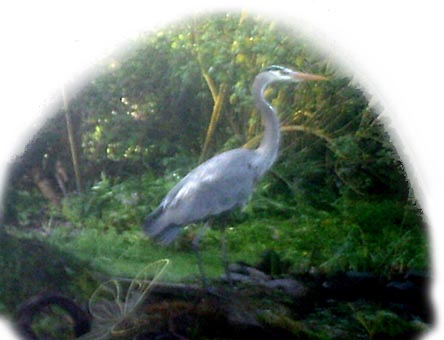
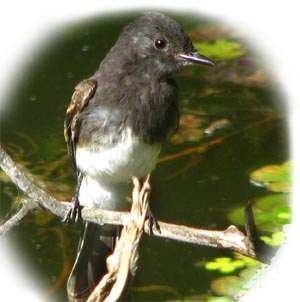
used at least 55 species of birds (including the gorgeous Great Blue Heron below), dozens of gorgeous,
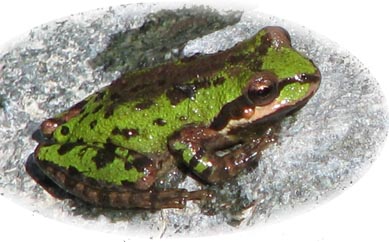
feisty dragonflies, and frogs galore. Some animals come just to drink or bathe,
but others come to live in and actually depend upon our pond for their survival. Such is the
case with both the dragonflies and the frogs. Without water, neither can breed
in our gardens at all because the first stages of their lives occur underwater. This is especially true of the dragonflies, which by far live
the longest phases of their lives as eggs laid in water and as under-water nymph. To see a current list of the
animals that have visited our bigsnest wildlife pond, click on this
true saying: BUILD A POND AND THEY WILL COME A wildlife pond essentially is a pond with some shallow edges, usually a beach, and
planted with native plants in order to attract native animals. Sometimes I'm
asked, "Should I go out and collect frogs or caddisfly larva, etc. to get
started?" The answer is "NO!" The way to attract wildlife is to provide habitat
for them. Without the correct habitat, animals won't have the essentials to
survive or enjoy themselves in your pond; they won't stay. The correct habitat
for your local wildlife is that which occurs naturally in your area. And the
special beauty of this is that what occurs naturally in your area is already
adapted to your area. Of course! This means you won't have to 'baby' it. It will
thrive in your ideal climate! How much more wonderful it is, to have your major
task each season only to be pulling up that growth which you deem to be
unnecessary or excessive (perhaps giving it to a friend) rather than having to add fertilizers, spray
pesticides, and/or amend the soils/water pH constantly. We only introduced one animal species to our pond, and that
was the fish. However, we are no longer
advocating their use. What we had put in are Gambusia, a fish native to TX, but not CA, where we live. At
maturity they are about the size of a minnow. You may know them by their common name:
Mosquito Fish. Here in California you can get them free through the Mosquito
Abatement Agency. We admit that they completely controlled the mosquito
population (in fact we had less with them than before we had the pond!). We even
liked to `pretend' they were little trout fingerlings! BUT, after a few years,
we came to realize that, not only were they eating the mosquitoes, but they
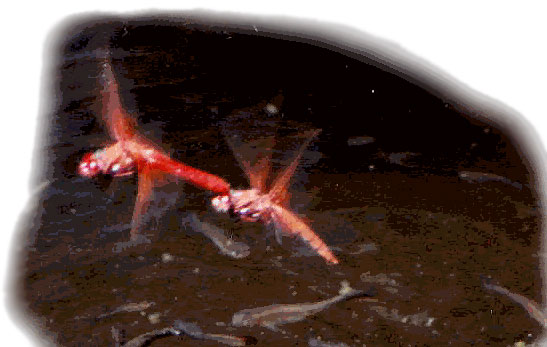
were also eating our native Chorus/Tree Frog eggs/pollywogs and the dragonfly eggs/nymph, etc. In fact,
they followed our beloved Cardinal Meadowhawk dragonflies around as they tandem
oviposited, considering the dragonflies as their own personal 'fish-feeders'! Because mosquito fish are not native to most of the USA, we now recommend that before using them, you give
'mosquito dunks' a try. They are a floating 'donut' of a certain bacteria (Bti) that ONLY
infects and kills mosquito larvae. It is NOT the same as the Bt that is sprayed
on foliage to control budworms and therefore will not kill caterpillars or dragonflies or pollywogs or
any other critters: only mosquito larvae and other members of the insect family diptera.
You can buy/order them through many pond/gardening/hardware supply shops or on-line sites. Then, after several week, should
the dunks not work for you, you might consider trying Killifish. There are native kinds for most regions and they are top feeders
to a much greater extent than the Gambusia. They may still eat the eggs of
dragonflies as they are deposited, but they would be much less likely to prey on
the dragonfly nymph or the frog eggs. Be aware that goldfish and Koi will
dramatically reduce the number and amount of wildlife species using your pond as
they too will eat the eggs and young of most of our aquatic wildlife. And they are not native to any region of the USA! So how do you create a wildlife pond?
The steps are simple. In order they are: 1. Choose to give a priority to
wildlife. This is a mindset that is necessary. In each
thing you do and with each item you add, consider your pond as providing habitat
for wildlife. This may sound easy, but everywhere you go, non-native plants and non-wildlife friendly techniques and materials will
be what is available.
2. Design your pond
with varying edge treatments, including a shallow beach area so animals may
enter and exit easily.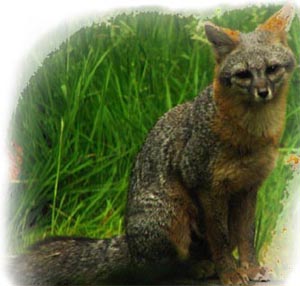
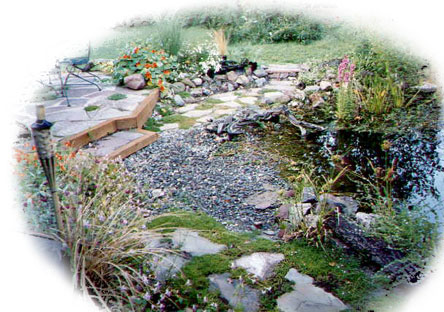
You may find the beach area to be an attractive convenience yourself as it serves well as an entryway for not only for pond maintenance but also for human cooling on hot days! By varying the edge treatments you will also be giving the pond a much more natural look and this technique provides many transitional areas for sheltering wildlife. Placing some driftwood partly inside and partly outside the water's perimeter will break the abrupt edge of the pond and join the pond's boundaries with your yard's, thereby greatly expanding the feel, the perception, of the pond's size. Use edgings of not only rock and gravel, but also use logs, grass and planted areas. This use of multiple edging treatments helps blend the pond into your yard and makes it appear more natural. This is true because the eye's perception of boundary will be changed.
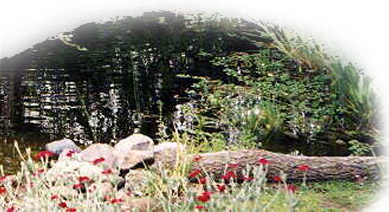
One technique we used that worked well was to create the illusion in one area that the water was being held back by a fallen log. In reality, the log has a cavity on the underside that we carved out and then we placed the log over cement bricks which are what is really holding the pond liner in place in that area.
3. Research to find out which plants are native to your area.
The closer the native region of the plants to your pond that you use, the more wildlife your pond will attract and the greater benefit you will provide.
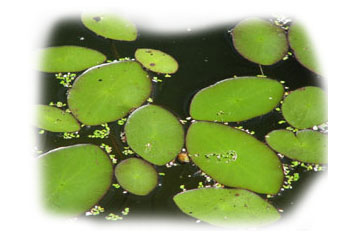
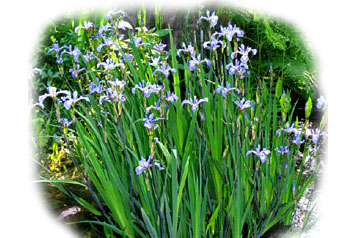
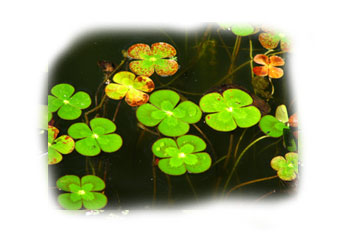
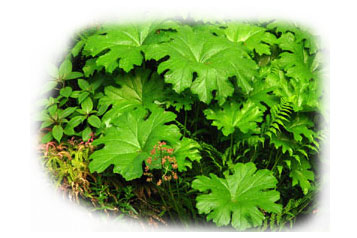
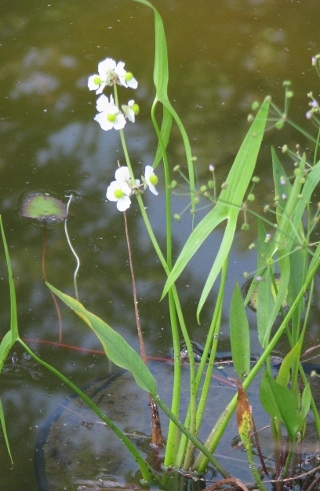
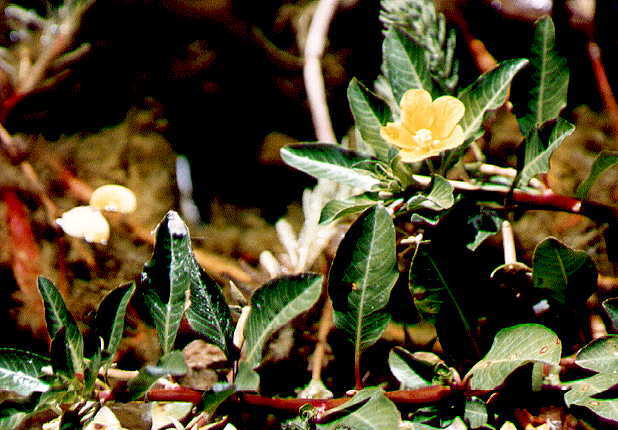
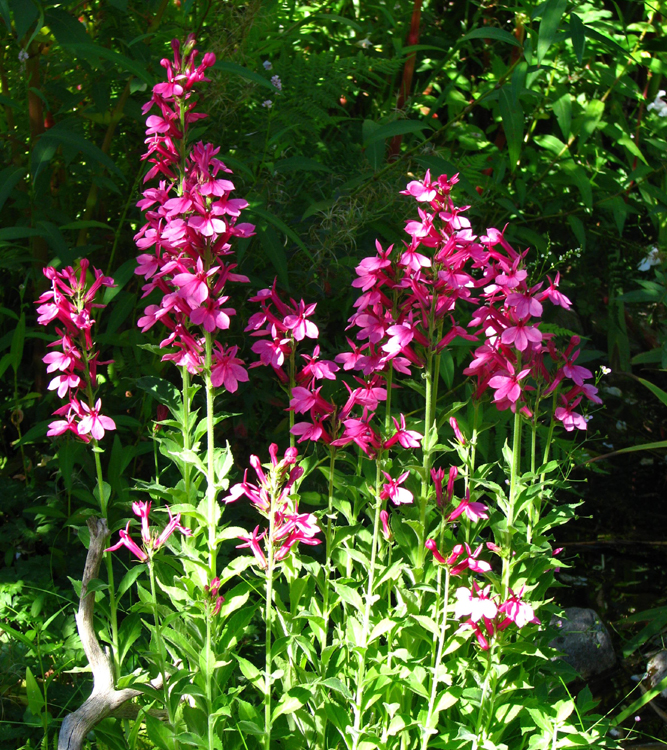
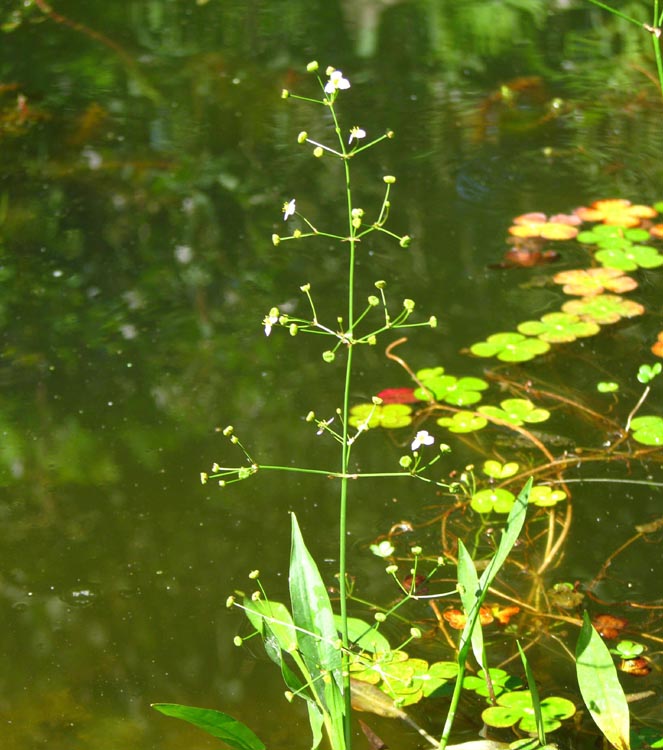
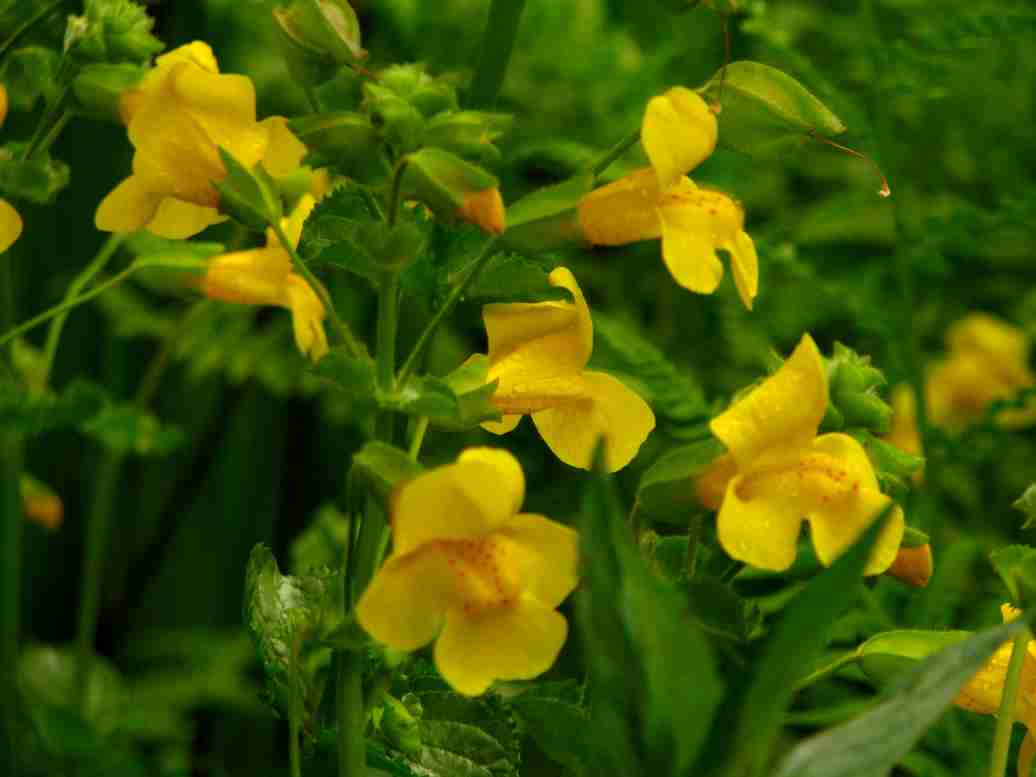
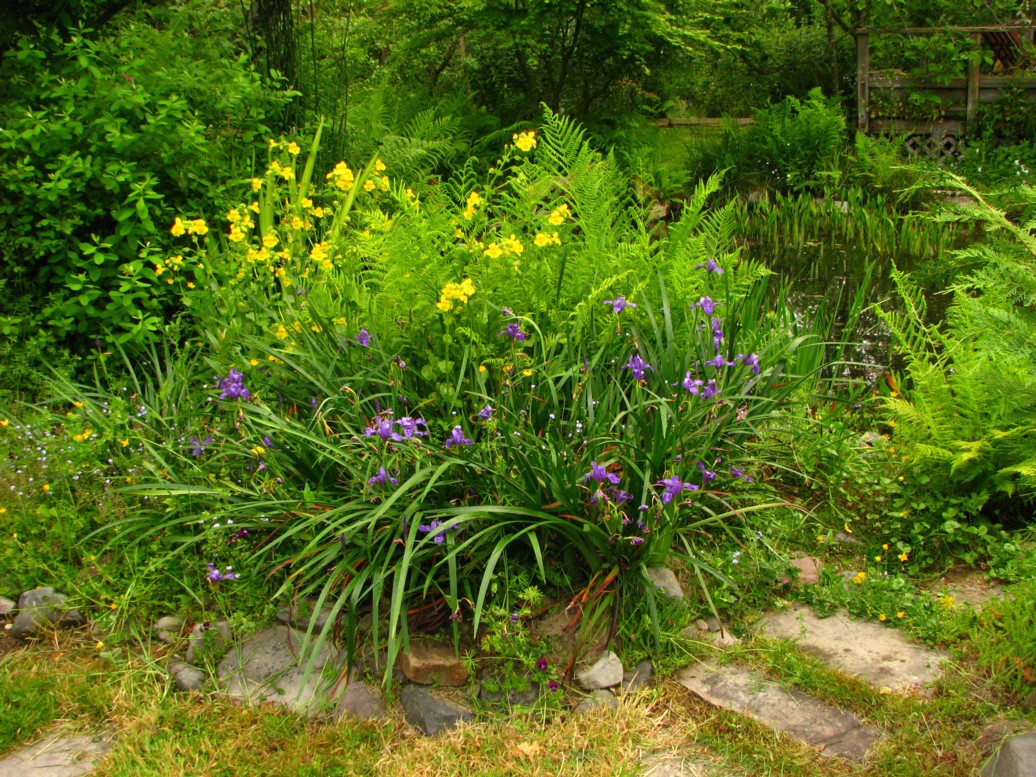
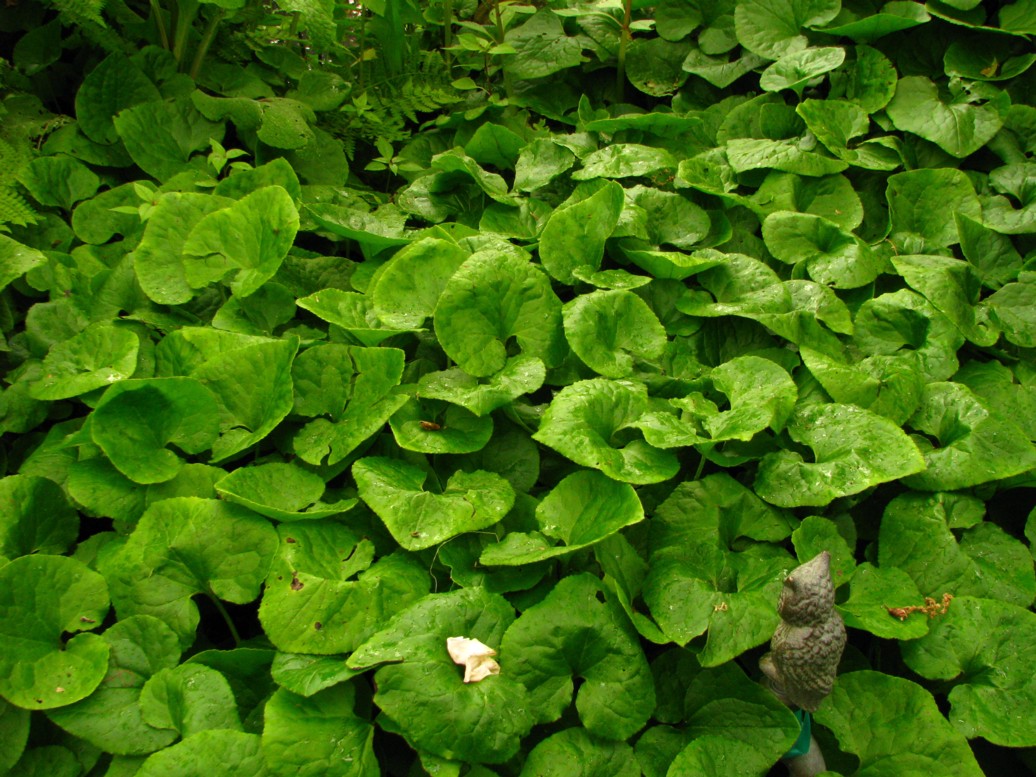
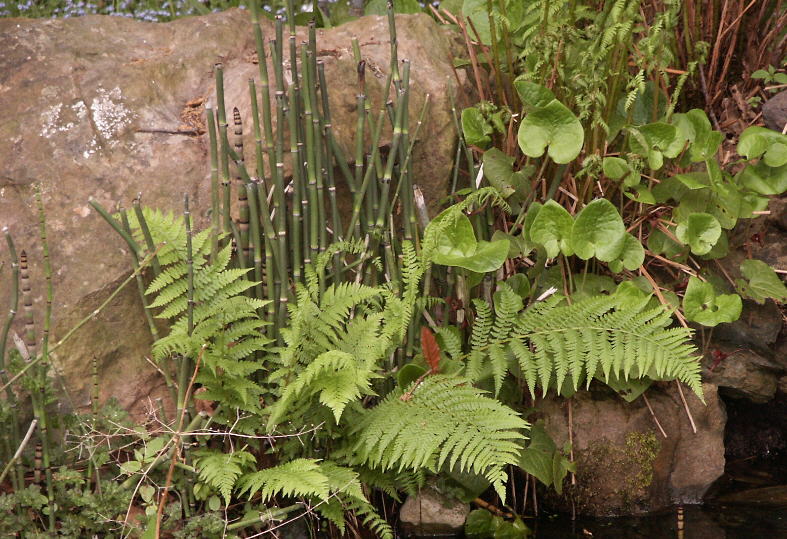
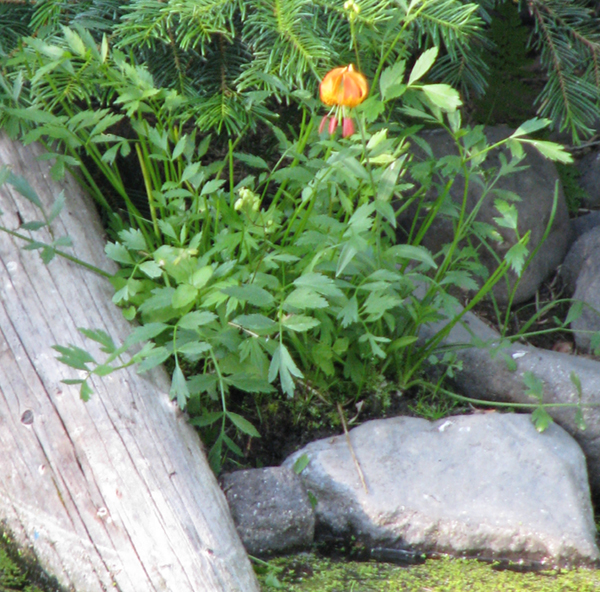
Four of the natives we used are:
|
|
|
|
|
|
4. Never collect plants in a park, or from private property without permission.
Take plants from a site only when that plant is abundant there. Use buckets to gather water plants. It is amazing the number of 'hitch-hiking' creatures that will be introduced to your pond that way. You will not only be introducing the flora, but also the fauna this way!
5. Build your pond slowly.

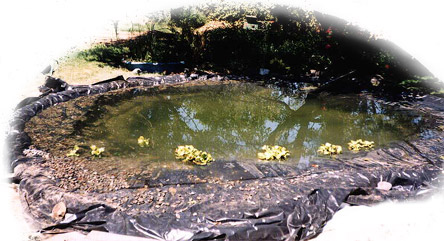
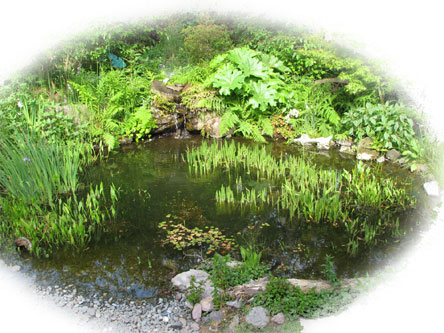
Don't rush. Do it slowly - take the time to see and enjoy its development. This photo shows the Bigsnest Wildlife Pond as it was when just first filled with water (1996).
Click here for an account of our pond's 1st year's development.
This link shows how the pond looked at 15 years old! (2011)
6. Provide areas of sunlight and shade; deep and shallow areas of water.
Not only do different plants have distinct requirements as to the amount of sunlight they need or can tolerate; also so do different creatures. Each has different requirements for warmth, light tolerance, etc. The amount of sunlight and its duration during the day combined with the depth of the water will influence the water's temperature. Temperature is important to many plants and animals.
Because raccoons will disturb things in the shallow areas (they are Mother Nature's rearrangers), some part of your pond will need a deep water depth of at least 18". This is necessary to create safe areas for critters to hide in; 3' is even better. And the deeper the pond, the more stable its temperature will be. The more stable the temperature, the healthier the environment.
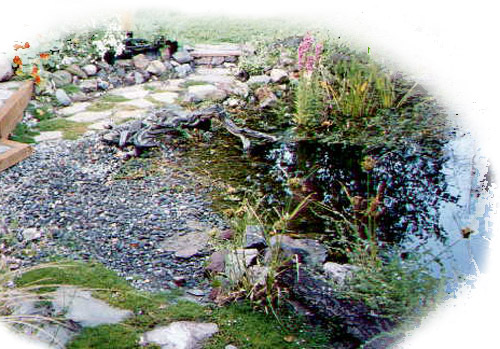
7. Furnish a further transition from pond to yard with a bog &/or planted beds adjacent to the pond.
These bogs and or beds will be great hiding places for frogs and lizards and other creatures including beneficial insects and even the insects eaten by the others. This transitional area will also help blend your pond naturally into your yard.
Another transitional item that not only helps break up the visual perimeter of your pond, thus making it appear larger than it really is, is to include a branch or driftwood that starts on the soil next to your pond and ends inside the pond. This feature has the further benefit of providing a means of escape for any critters that are non-swimmers whom might accidentally enter your pond.
8. Control algae naturally.
Use the technique of covering 2/3 of the
surface area with plants with floating or emergent leaves, and 1/3 of the bottom area with underwater plants
to control algae.
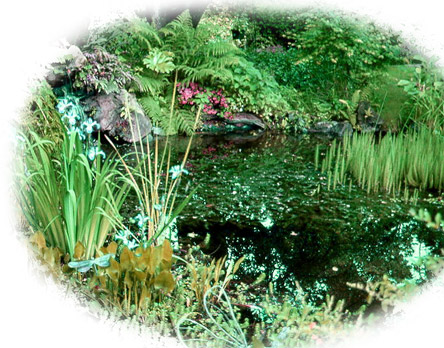
This is much more effective than chemicals and it is a constant that doesn't need 'playing around with' once it is established. The first year or two you will experience some algae growth as your pond stabilizes. But after that, algae should not be a problem. Good plants to use that have leaves that float on or emerge from the water are creeping primrose, native water lilies and water clover. Plants to use that have their growth underwater include elodia, cabomba, sagittaria, and milfoil.
9. Don't be too fastidious about cleaning.
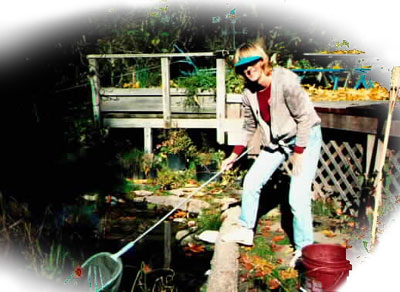
Much of the wildlife you are hoping to attract lives in or feeds upon critters that are living on your pond bottom and in amongst the plants. Dragonfly nymph clamber about on the plants &/or hide in the litter on the bottom of the pond. Frogs and toads attach their eggs to floating or emergent vegetation. Of course, you must remove leaves and other debris that may fall into your pond. A helpful technique for when you do some cleaning is to always check the skimmer net for critters before discarding its contents. Sometimes we put our skimmed leaves into a bucket of water. The dragonfly nymph will gravitate towards the sunny side and can then be poured back into the pond before the leaves are dumped into your compost bin. Another method is to put your removed debris on a wire mesh suspended over the water for several hours so critters can wriggle their way back into the pond.
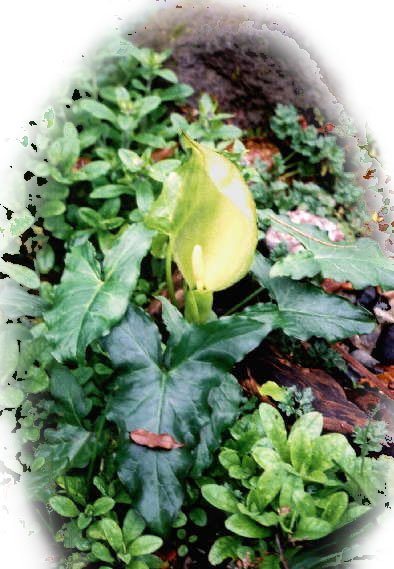
10. Allow nature to make her own additions.
Some of the effects we love the most about
our pond are things that have just 'sprung up' on their own. Sometimes we have
to wait and see what develops. If we like it, it stays. Such was the case with
this, our 'mystery' plant whose dramatic large green flowers during the very
early spring months are a real delight!
We feel we've needed to let our 'ownership' of the pond go,
and instead become it's stewards.
.................end of list of steps for building a wildlife pond.................
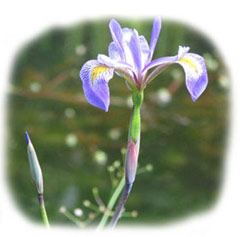
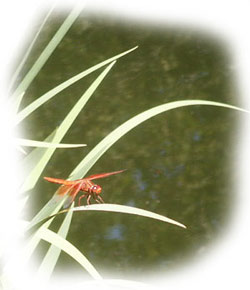
To find out what plants are native to your area, do a web search for your state's Native Plant Society (here is a link to California's), go to the library, &/or ask your local pond nursery person. We were able to collect almost all of our plants along roadside ditches, thereby keeping our costs to a minimum. Remember to never collect plants in a park or on private property without gaining permission first and to never take a plant that is not abundant at the site. Many common pond plants are native to the Americas, including some that are native to North America. The closer the native region of the plants you use to your pond, the more your wildlife will be adapted to it and the more you will be able to attract.
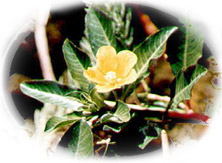
A few examples of native American water plants are Arrowhead, Blue Flag Iris, Water Calla, Horsetail, Cattail, Lizard's Tail, Mare's Tail (lots of tails!), Lobelia, Marsh Marigold, Pennywort, Creeping Water Primrose,
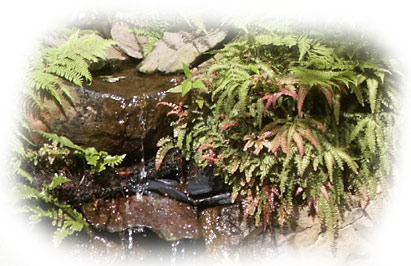
Water Forget-me-not, Indian Rhubarb, Cardinal Flower, Golden Club, Water Cress, Water Plantain (Alisma), Sweet Flag, and many others.
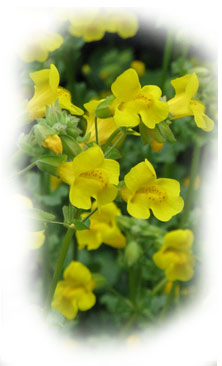
Common plants used in bogs and around ponds that are American natives include Seep Monkey Flower, Douglas Iris, Dogwood, wild Ginger, Lady Fern, Penstemon, Sword Fern, Five-finger Fern, Deer Fern, Foxglove, Trillium, Optical Fiber Grass, Clarkia, Lupine, Wild Onion, Tiger Lily, Dogwood, Huckleberry, Trillium, Bleeding Heart, ...I could go on for pages!
So, if you think you would enjoy having a pond that attracts wildlife, is beautiful, contributes towards the replacement for our dwindling wetlands, provides hours of entertainment, education and relaxation, costs less to build and maintain than a Koi pond, then please do consider a wildlife pond.
......................
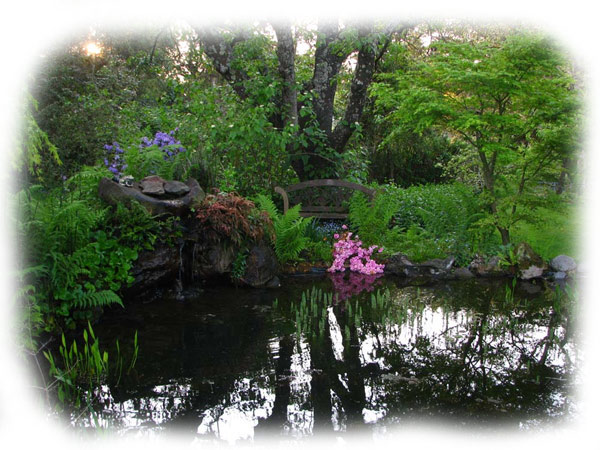
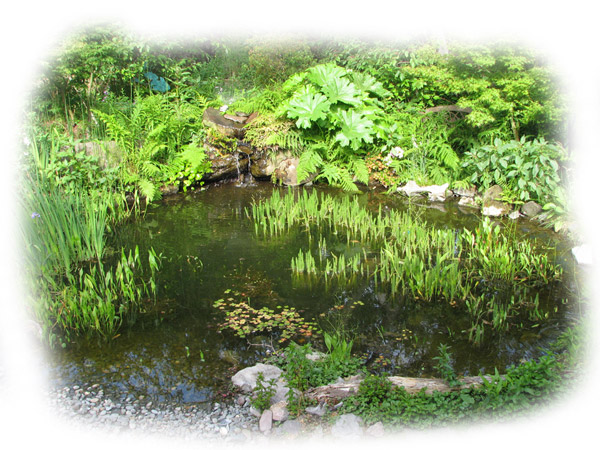
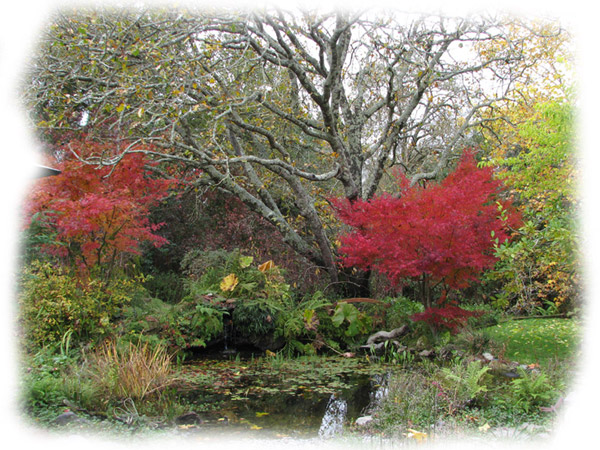
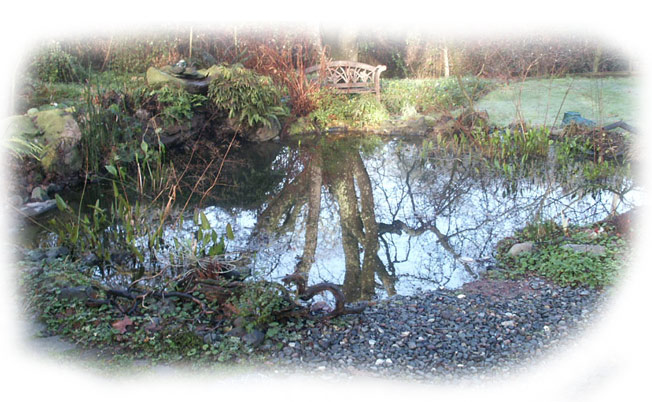
In closing, here are four last pictures showing examples of what you can hope to accomplish. Shown are scenes of our ~20X24 ft. pond that were taken through the different seasons: in spring, summer, fall and winter.
Spring 2009:
Summer 2008:
Fall 2011:
Winter 2005:
...
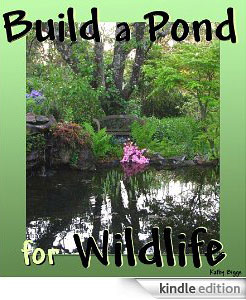
To learn more about creating a pond for wildlife, consider buying Kathy's newest creation, the eBook Build a Pond for Wildlife.
|
CLick on cover to learn more:
|
Kathy Biggs is the creator of the
award winning web site, California Dragonflies and
Dragonflies of the Southwest. She is also the author of several dragonfly guides: Common
Dragonflies of California, A Beginner's Pocket Guide. and
Common Dragonflies of the Southwest and her new eGuide
to dragonflies: Dragonflies of
California and the Greater Southwest
In 2006 she corroborated with Tim Manolis on the ONLY known dragonfly coloring book,
Dragonflies of North America, A Color and Learn Book with Activities which also is available on a CD.
Her eBook for Building Ponds for Wildlife is is also available as a CD -
Build a Pond for Wildlife.
She and her
husband David created their wildlife pond in 1996 and can't imagine living
without a pond now. In fact, they already have a pond at their mountain retirement home, although the home isn't finished yet! Kathy would never have written the dragonfly guides or her other books if they
hadn't chosen to '"build a pond and they will come." |